Synk
Administrative management platform automating internship tracking and email communications.
01 — The Context
Managing dozens of students doing an IT internship is an extremely time-consuming process for administrative staff. Synk is a web application designed to solve this problem.
The main objective was to digitize complex administrative processes (validating forms, signatures, legal tracking) and automate repetitive tasks, especially the countless emails exchanged between the administration, students, and corporate tutors.
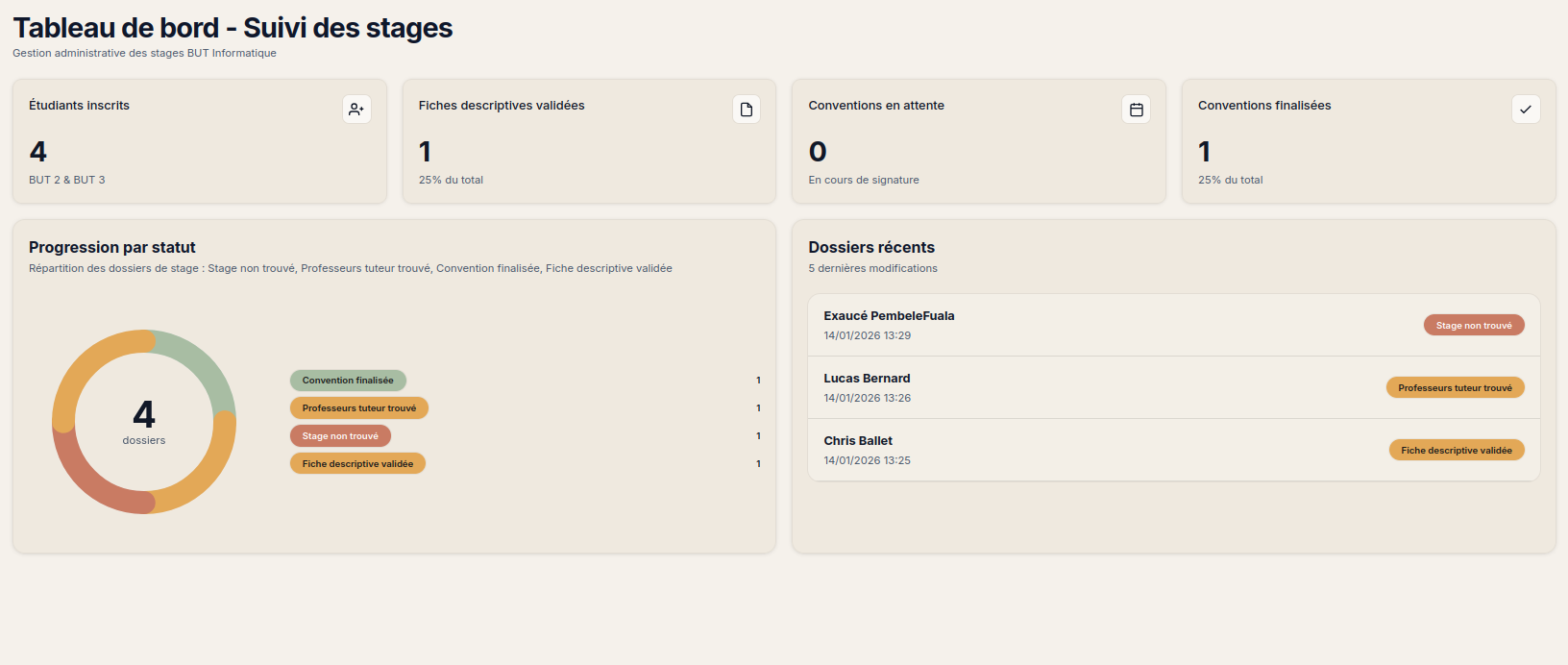
02 — The User Interface
The application is structured so that university staff can manage everything from a single central point.
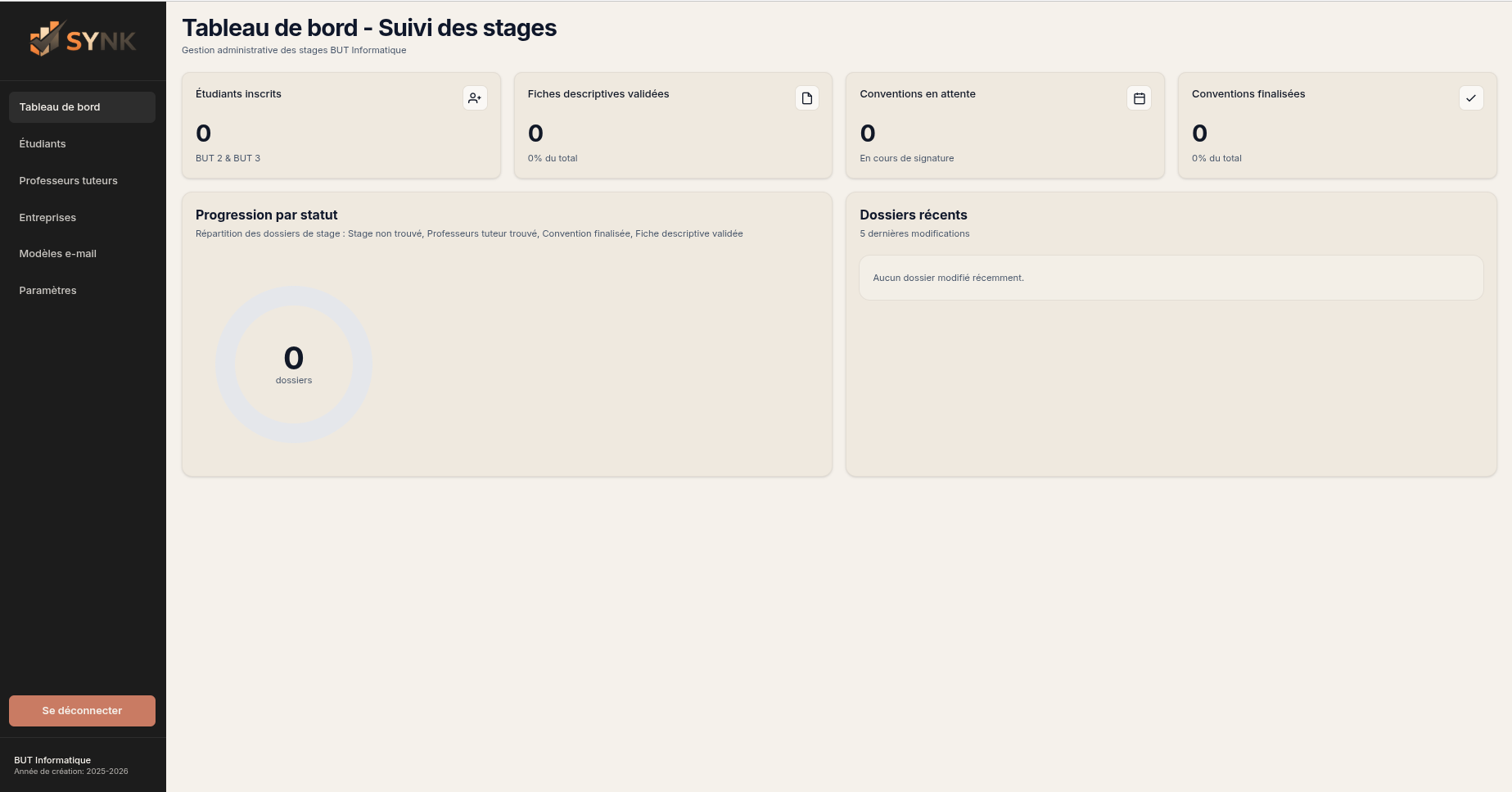
The lateral navigation allows quick switching from the global dashboard to the individual management of students, tutoring professors, and the enterprise database. Special attention was given to visual clarity and the accessibility of massive data (notably through CSV import modules).
03 — The Student Workflow
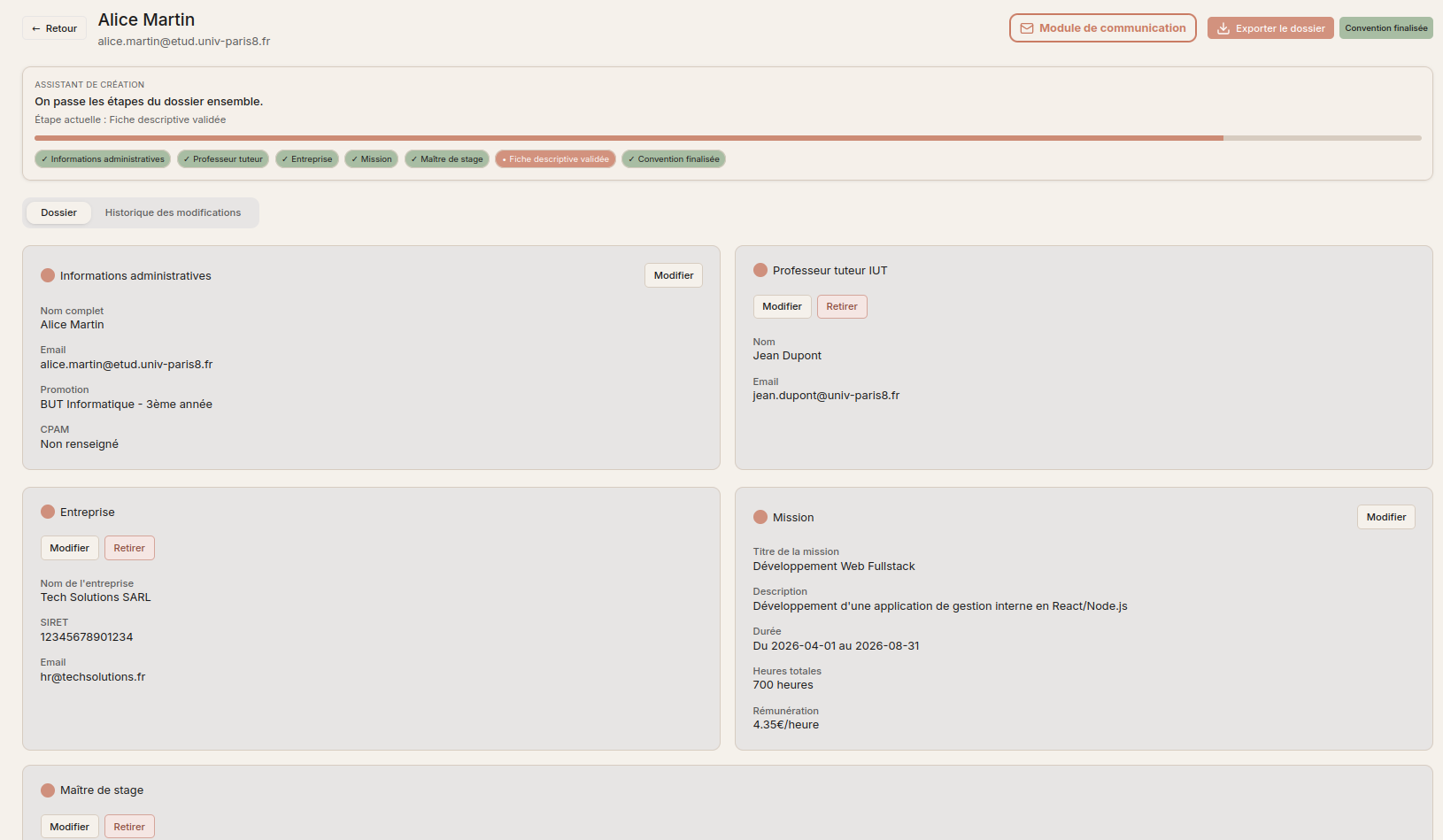
Each student has a comprehensive “Internship Folder” that operates as a workflow.
The visual creation wizard (the colored badges at the top of the screen) guides the manager:
- Entering administrative information.
- Assigning the university tutor and the company.
- Defining the mission and validating remuneration (with strict legal control).
- Drag & Drop uploading of descriptive sheets and managing the signature circuit for agreements.
04 — The Dynamic Email Engine
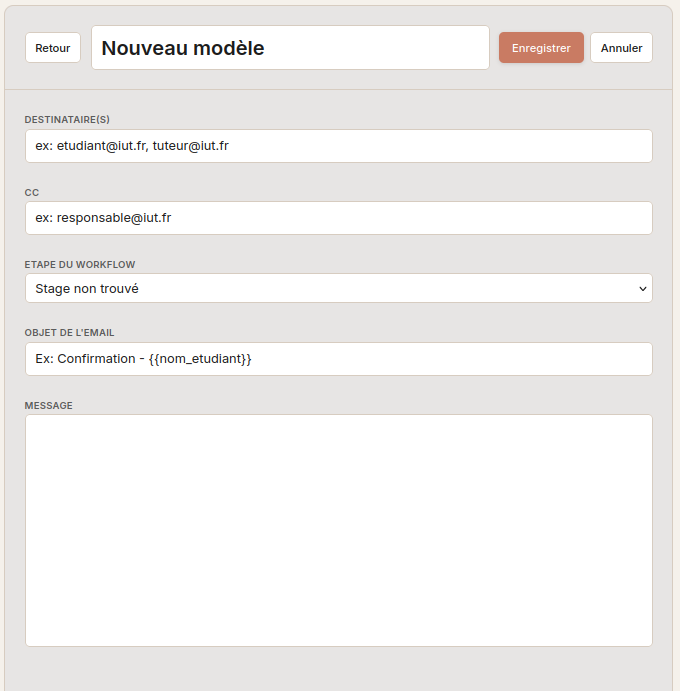
This is the core of Synk’s automation. To streamline communications, a complete mail merge module was developed.
Staff can create email templates for various events (reminders, signature requests). The interface provides a “tag library” (e.g., {{student_firstname}}, {{company_name}}) allowing the Java backend to dynamically inject real data from the PostgreSQL database, and then handle bulk sending via the Gmail API.
05 — Technical Architecture
A Robust Full Stack Architecture The application relies on a Spring Boot (Java) backend API communicating with an Angular frontend. Authentication is secured via JWT.
My Role and Organization I performed a rotation between Frontend, Backend, and DevOps developer roles every two weeks within a 6-person Agile team. This setup allowed me to implement Continuous Integration (CI/CD) by configuring testing pipelines with Jenkins and ensuring code quality and security monitoring using SonarQube.
👉 A comprehensive manual was written for the client: View the Synk User Guide (PDF)