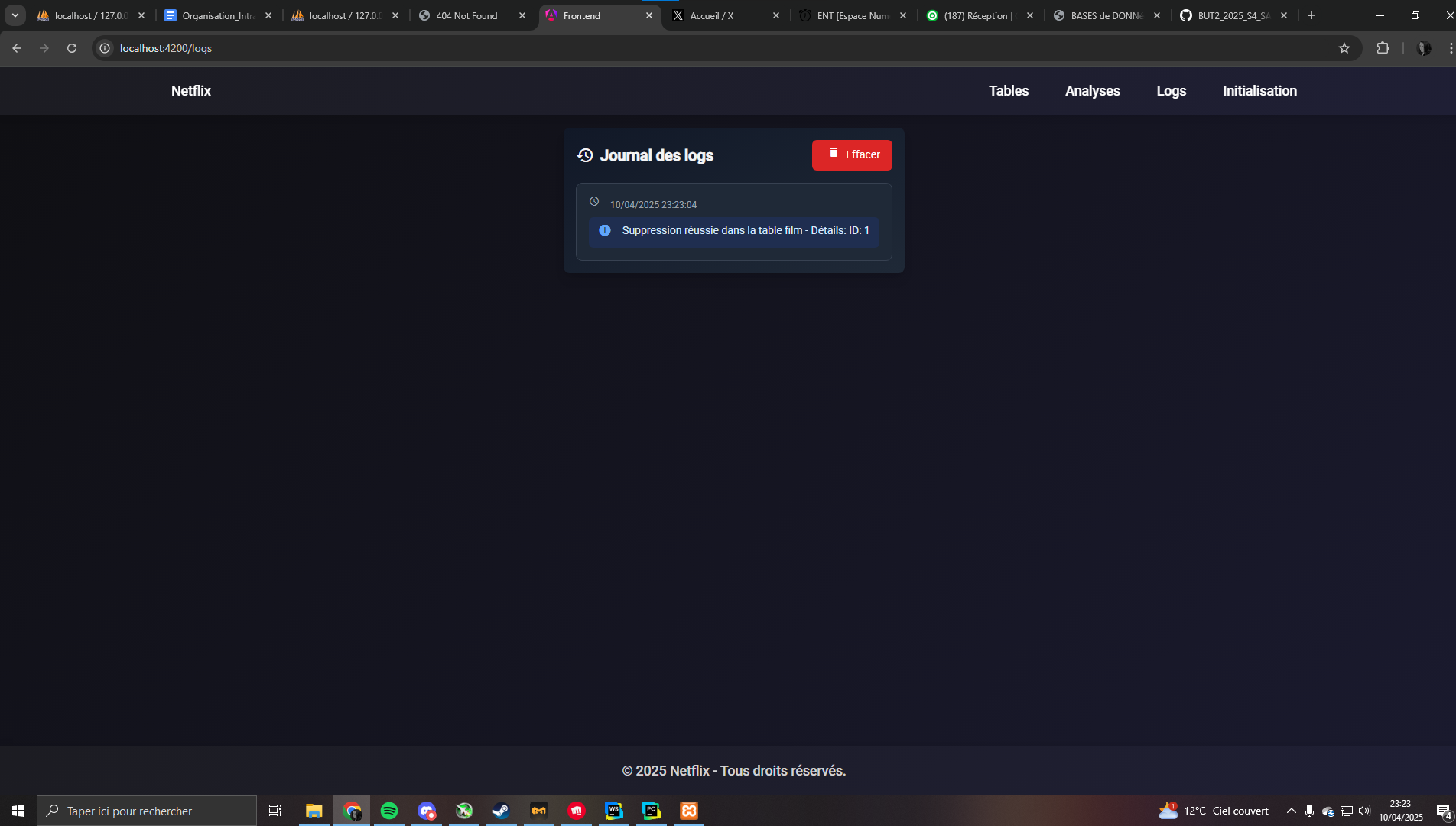
Netflix Database Manager
Angular/Flask application to manage a movies and series database.
01 — The Context
This university project (2025) was designed as an intensive experimental playground to consolidate our newly acquired skills in the Angular and Flask stack.
The chosen study subject was the Netflix universe. The goal was not to recreate the video streaming service, but to build a business administration interface (Back-Office) capable of handling a heavy relational data architecture (series, episodes, actors, categories) robustly.
02 — Data Manipulation
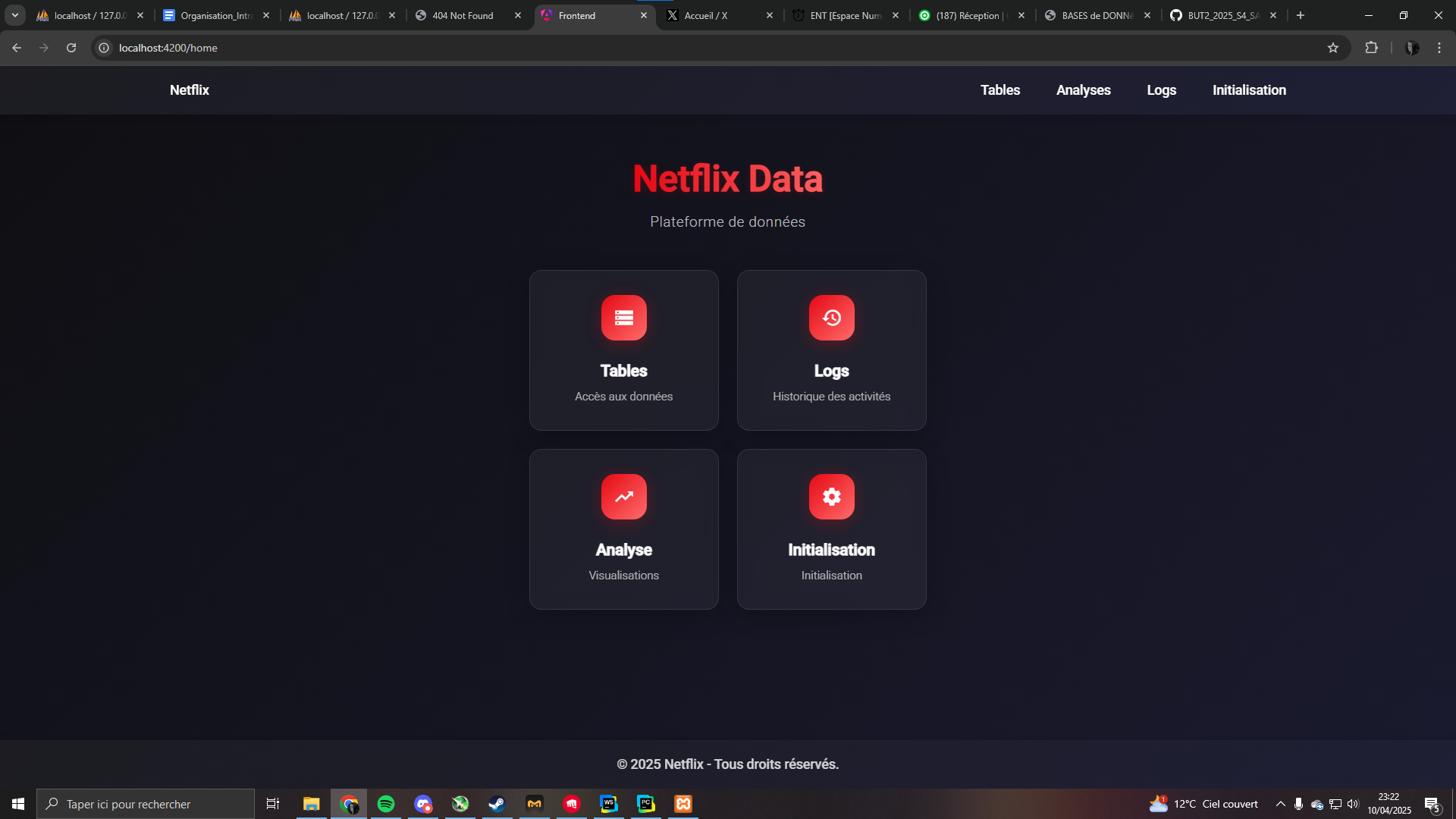
The central interface allows the administrator to navigate the massive database through a complex table system.
We implemented many essential client-side and server-side features:
- A search system, multi-criteria filtering, and dynamic sorting.
- Optimized pagination to avoid overloading the browser’s memory when displaying thousands of rows.
- Adding, editing, and deleting with strict validations and fine-grained error feedback (Angular forms connected to Flask HTTP status codes).
03 — Integrity and Analytics
Beyond simple “CRUD” operations (Create, Read, Update, Delete), the project required meticulous management of relationships between PostgreSQL tables.
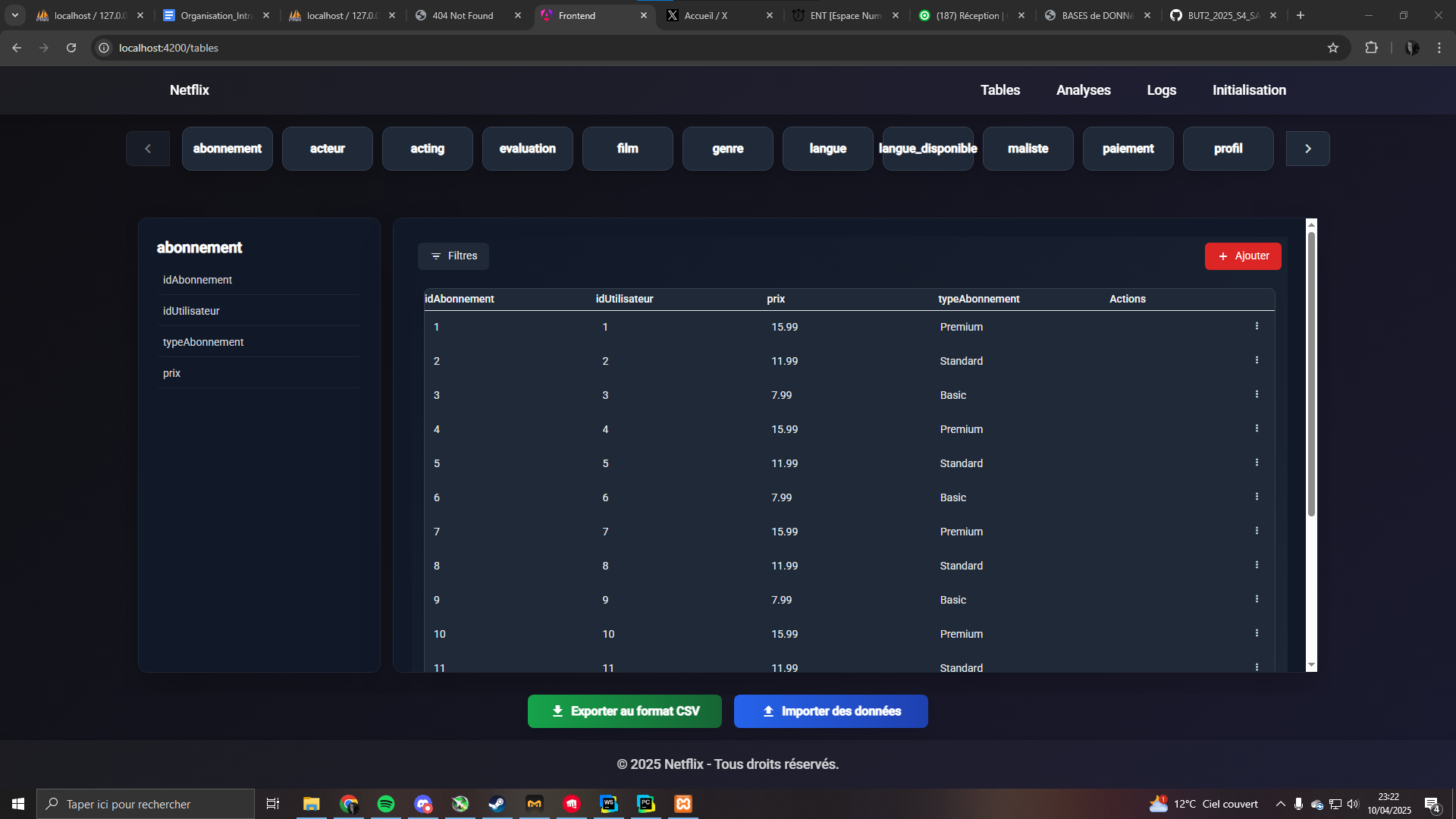
One of the main difficulties was ensuring referential integrity (for example, properly managing the cascading deletion of a series without leaving orphaned episodes). The application also offers a Data Analytics view to graphically visualize content distribution.
04 — Technical Architecture & Logs
Dynamic Data Import
One of the system’s critical features is the ability to import a raw .sql database and load it on the fly into the application via the web interface.
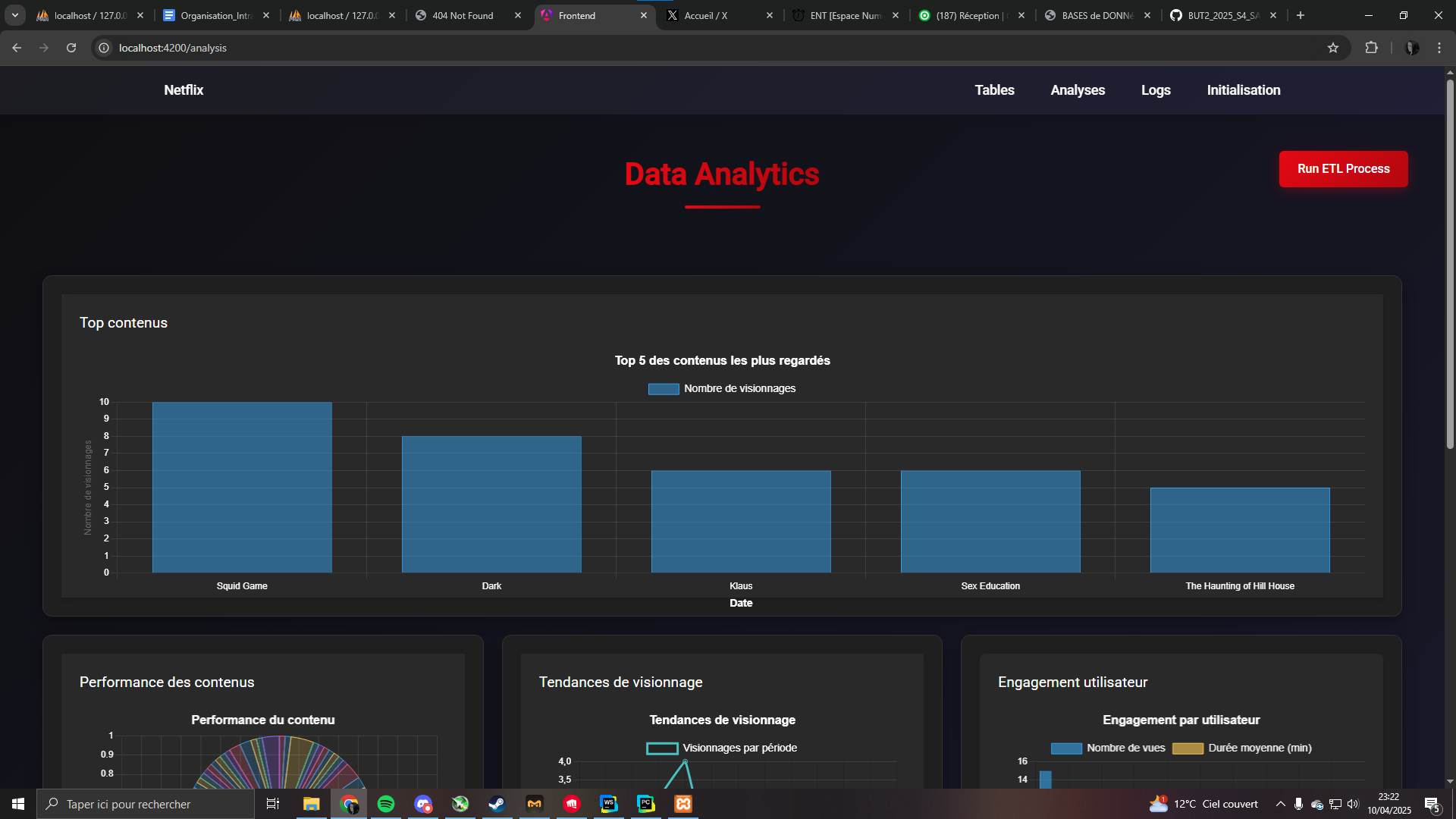
As shown in this terminal capture, the team (6 developers) had to implement rigorous traceability (SQL logs) on the Backend (SQLAlchemy) to monitor query behavior during large imports and cascading processes.